
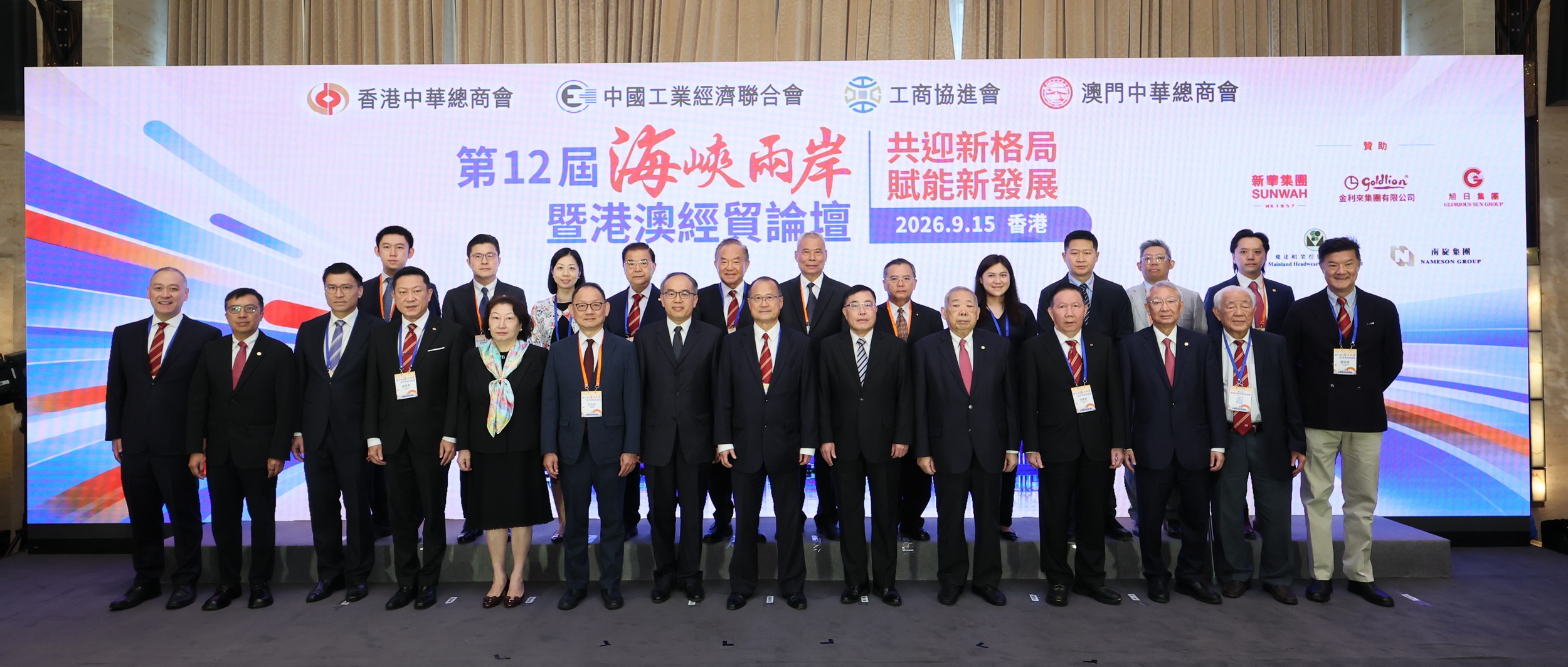
Hosted on a rotating basis by the Chamber, this year’s forum was held at Harbour Grand Hong Kong under the theme “Embracing the New Landscape, Empowering New‑Growth Development”. Jonathan Choi, the Chamber’s Chairman; Xiong Meng, Executive Vice President of the China Federation of Industrial Economics; Chiao Yu‑lon, Executive Supervisor of the Board of the Chinese National Association of Industry and Commerce of Taiwan and Chui Sai‑cheong, President of the Macao Chamber of Commerce, officiated at the opening ceremony. Political and business leaders as well as corporate elites from the Chinese Mainland, Taiwan, Hong Kong and Macao gathered to delve into regional‑economic development and cooperation opportunities amid the new global landscape, aligning with the strategic arrangements set out in the national 15th Five‑Year Plan. Christopher Hui, Secretary for Financial Services and the Treasury, and Teresa Cheng, Secretary‑General of the International Organization for Mediation (IOMed), delivered keynote speeches.
Two panel discussions were arranged during the forum. Industry heavyweights in attendance offered valuable perspectives on two major themes: “AI Empowering Innovation Ecosystems and a New Framework for Regional Cooperation” and “New Opportunities for Cross‑border Green‑Finance and Industrial‑Chain Integration”.
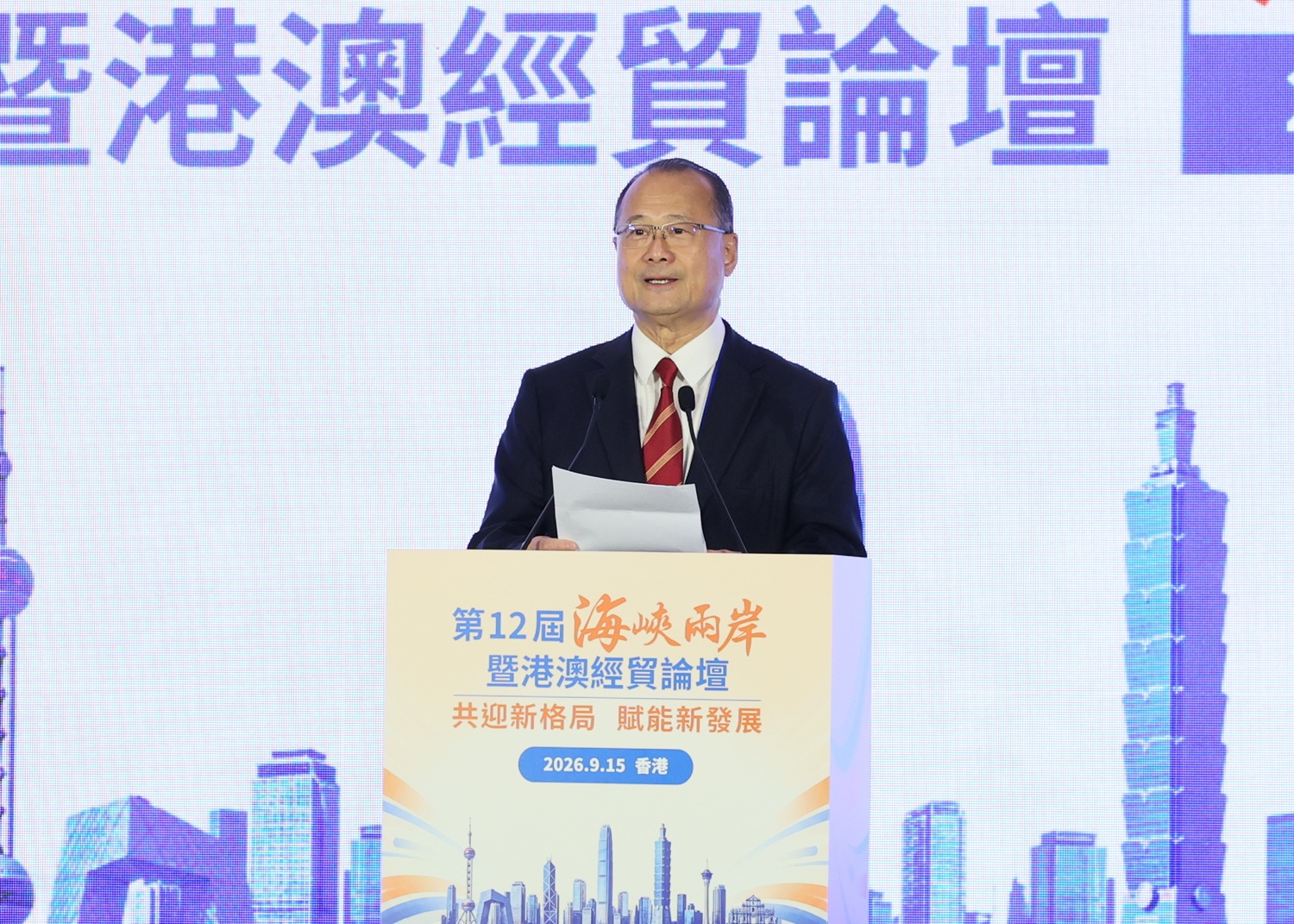
Jonathan Choi: Enterprises across the strait, Hong Kong and Macao join forces to go global
Against a complex and fluid global political‑economic environment, enterprises from the Chinese Mainland, Taiwan, Hong Kong and Macao may capitalize on opportunities brought by the 15th Five‑Year Plan, the Chinese Mainland’s further opening‑up and high‑quality‑development drive. They can jointly explore markets within ASEAN, the Middle East and the “Belt and Road Initiatives” (B&R). Choi put forward four concrete directions: establishing joint‑innovation and industrial‑chain coordination mechanisms, building a framework for enterprises to join forces in going global, fostering a digitalized supply‑chain and cross‑border e‑commerce service ecosystem, and deepening innovation in cross‑border green finance.
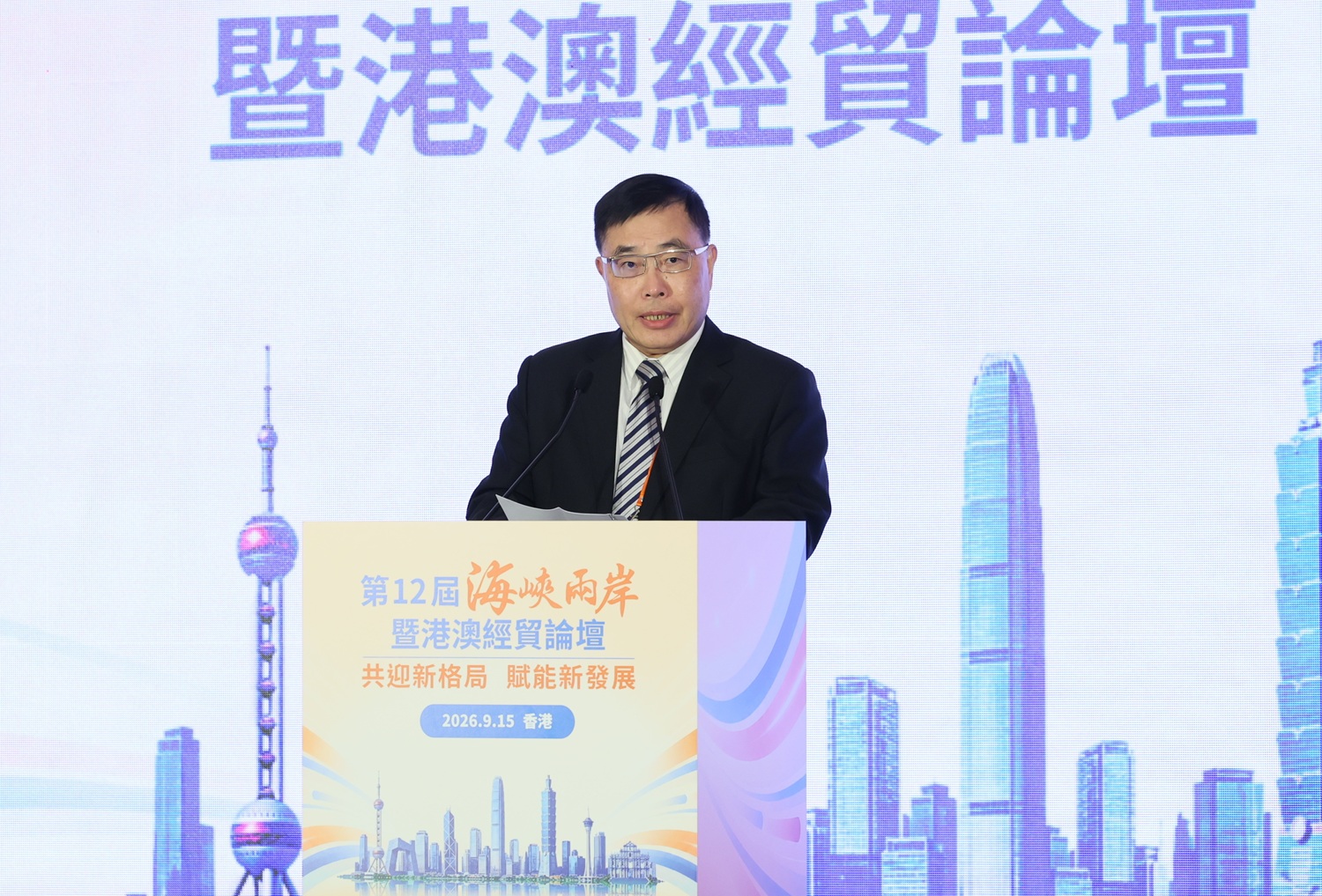 Xiong Meng: Expanding cross‑border cooperation in AI and green industries
Xiong points out that regions across the Strait, Hong Kong and Macao should jointly seize the AI development wave. Boasting a large‑scale core AI industry, the Chinese Mainland can leverage Hong Kong’s foundational AI research and International Data Hub, Macao’s unique platform connecting Portuguese‑speaking countries, and Taiwan’s leading AI‑hardware technologies to boost the commercialization of research outcomes. He also notes that the Chinese Mainland’s sizable low‑carbon industry can capitalize on Hong Kong’s strengths in green‑bond issuance, the Macao International Carbon Emission Exchange, and Taiwan’s experience in green manufacturing to deepen cooperation on green supply chains and cross‑border finance.
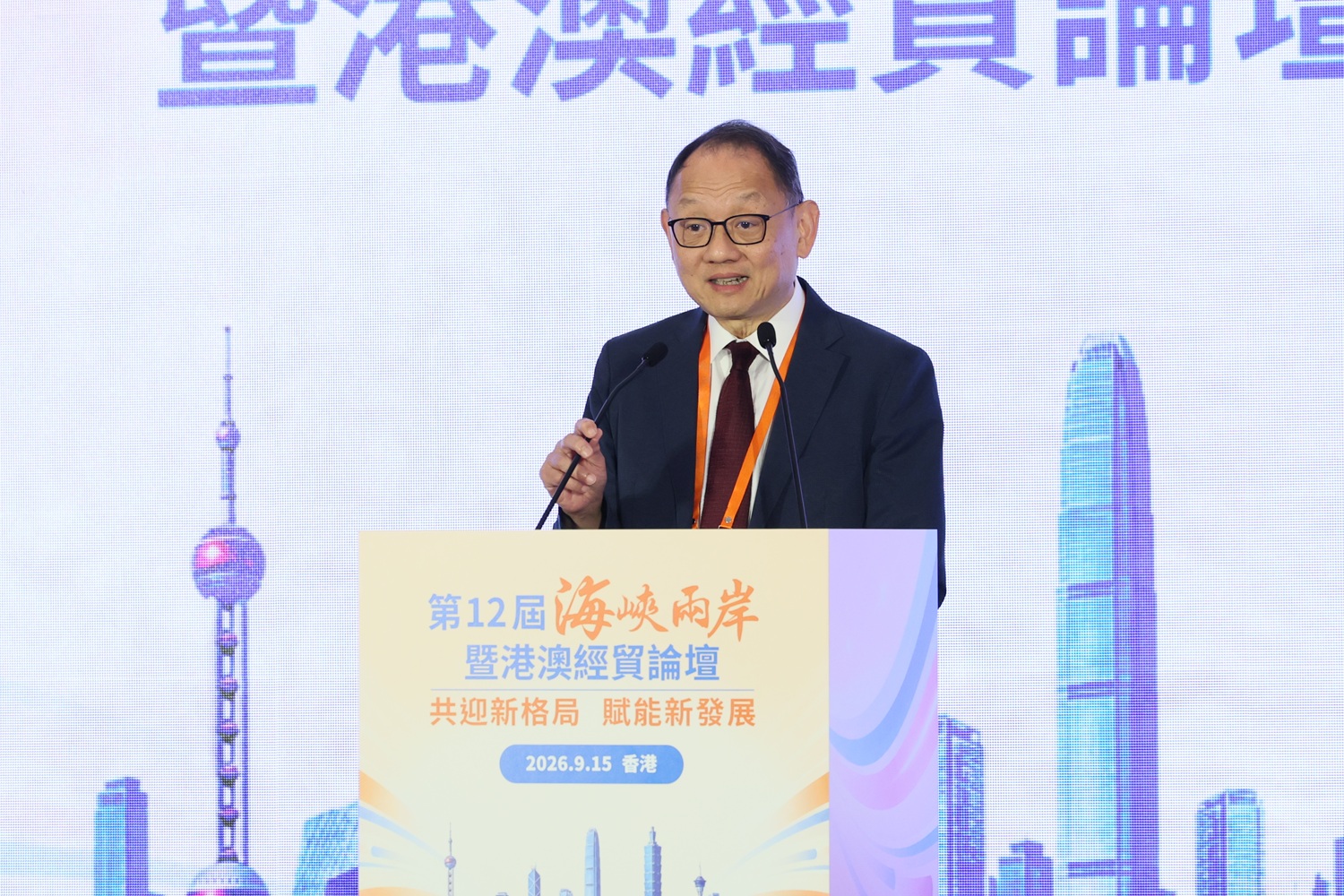 Chiao Yu‑lon: Unlocking Greater Bay Area potential through resource integration
Regions across the Strait, Hong Kong and Macao possess distinctive strengths in economic scale and complementarity. According to Chiao, resource integration can create broader room for collaboration. The development of the Guangdong‑Hong Kong‑Macao Greater Bay Area (Greater Bay Area) also presents valuable opportunities. Guangdong has a solid industrial base, Taiwan excels in R&D and manufacturing, while Hong Kong and Macao are competitive in finance and logistics. Joint efforts are expected to generate substantial synergistic benefits.
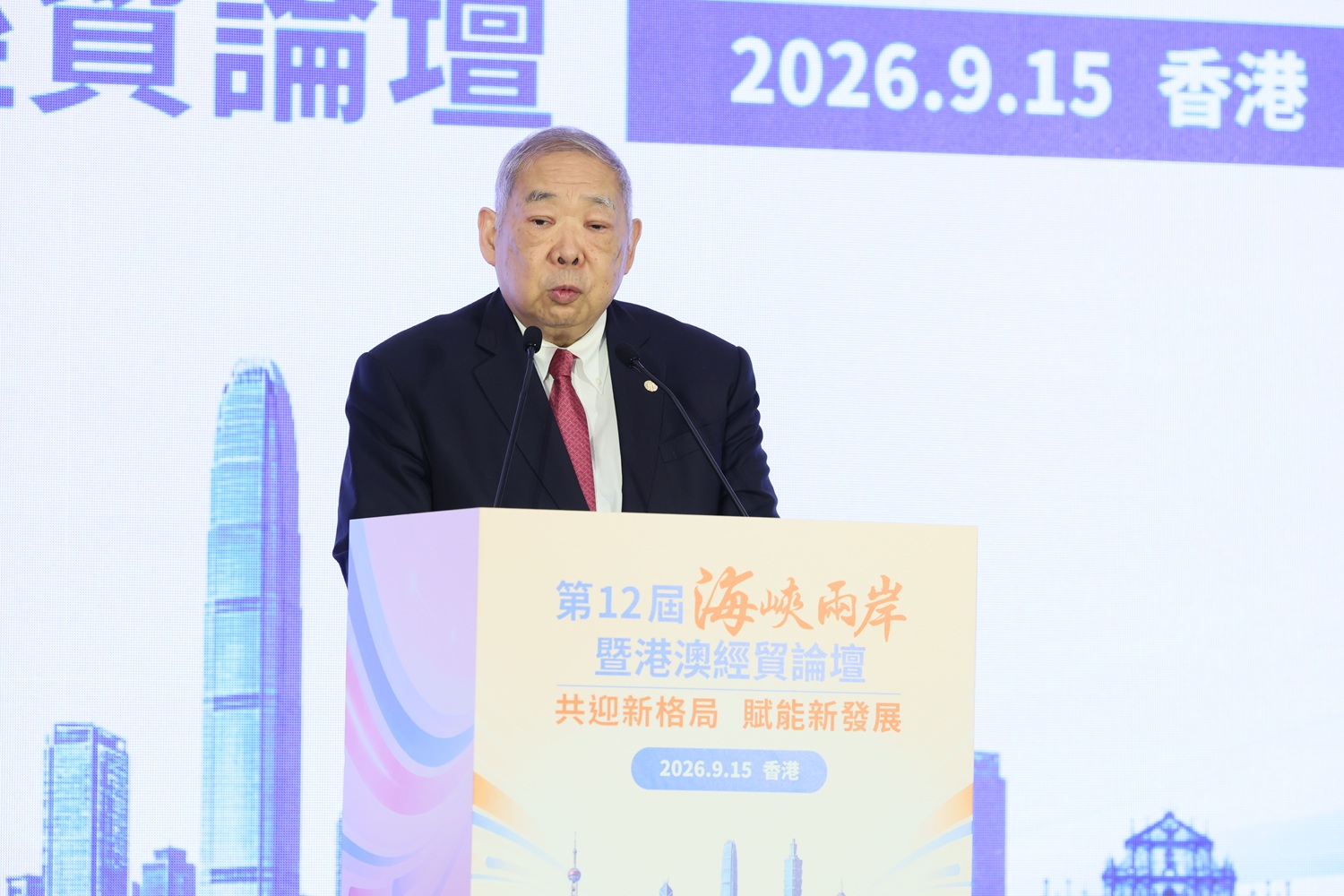 Chui Sai‑cheong: Macao Leverages its Platform Strength to Help Enterprises “Join Forces to Go Global”
This year marks the launch of the national “15th Five‑Year Plan”. Chui observes that Macao faces new developments, new platforms and new opportunities for deepening economic and trade ties. Macao has unveiled its “3‑5 Year Plan” to strengthen industrial collaboration between Macao and Hengqin and advance its “1+4” industrial strategy. Acting as a “precision connector”, Macao conducts active overseas outreach to support enterprises that “join forces to go global”.
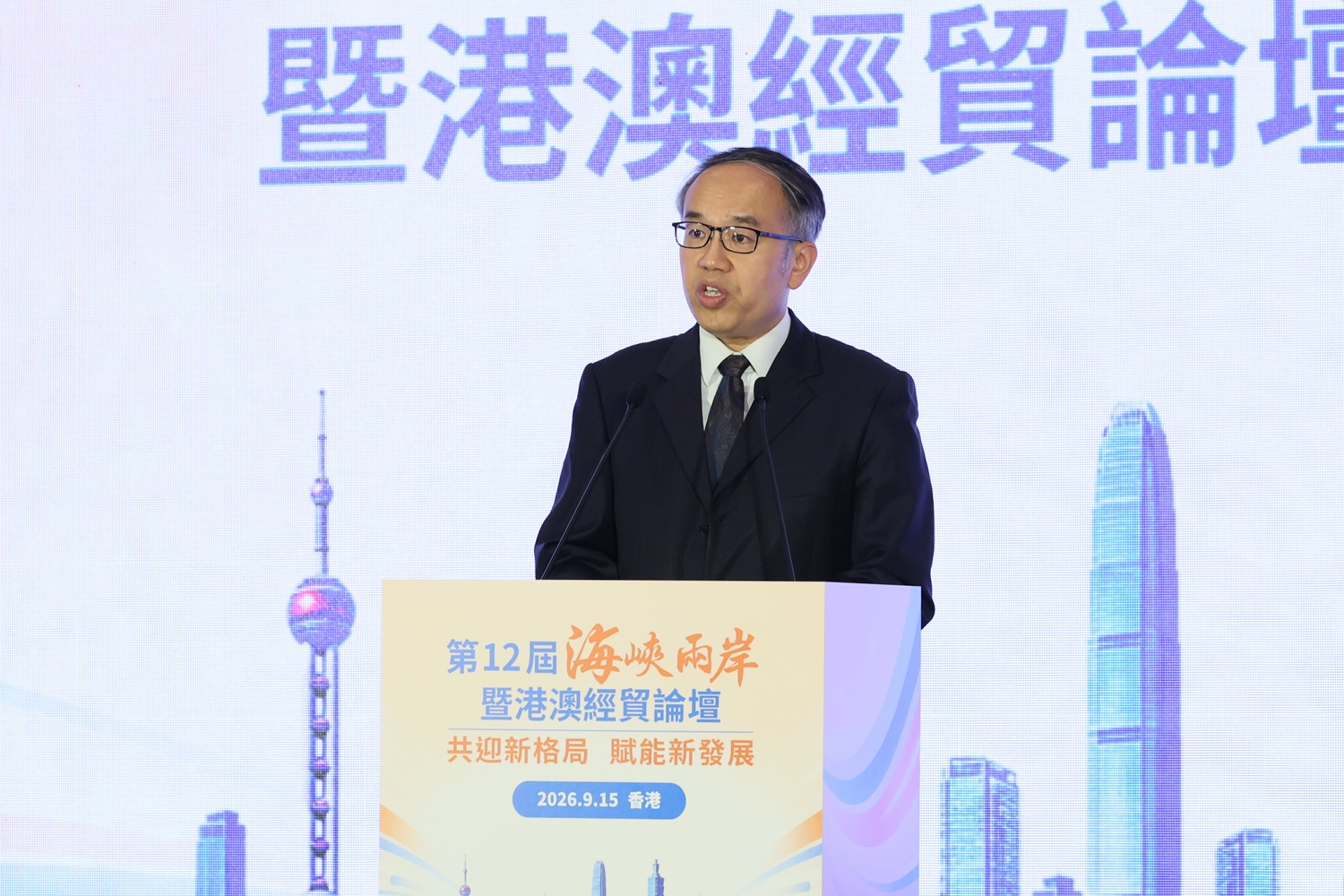
Christopher Hui: Harnessing Hong Kong’s strengths to support business growth
Against current global uncertainties, Hui believes Hong Kong should keep tapping its comparative advantages and deploy expertise in finance and professional services to support enterprises across the Strait, Hong Kong and Macao. He identifies three key roles for Hong Kong: capitalizing on its status as an international financial center and offshore RMB hub, reinforcing its capacity as an asset‑and‑wealth‑management hub, and building a professional‑services ecosystem to facilitate corporate transformation. He stresses that Hong Kong will continue to apply its strengths to meet national needs and share the dividends of regional development.
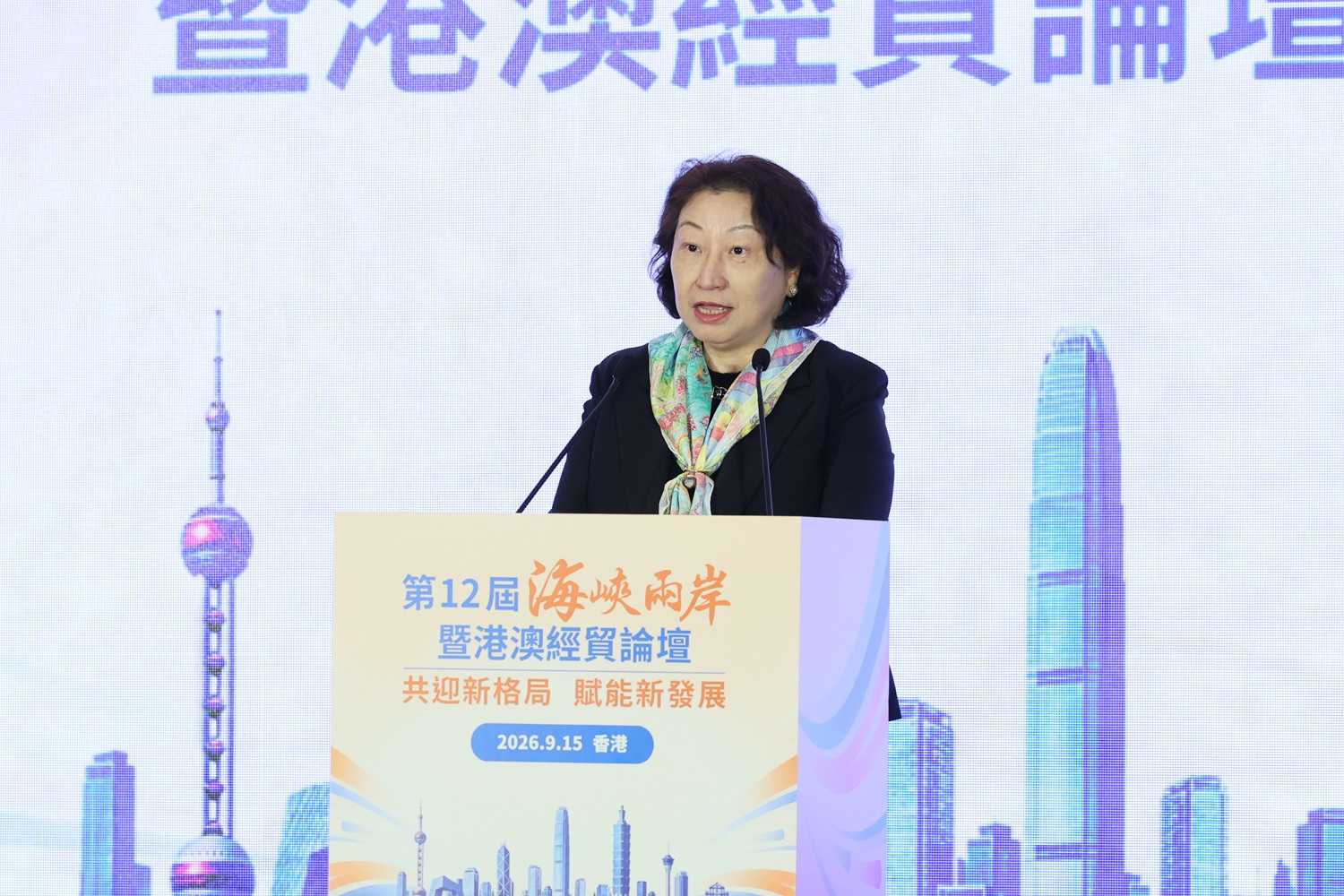 Teresa Cheng: Delivering rule‑of‑law backing for cross‑border enterprises
Cheng notes that the establishment of the International Organization for Mediation in Hong Kong demonstrates international recognition of Hong Kong’s rule‑of‑law framework and “One Country, Two Systems”. The International Organization for Mediation features open‑and‑inclusive services for institutions worldwide, innovative case‑handling procedures, and a panel of competent and trustworthy mediators. She adds that Hong Kong’s well‑established common‑law system, bilingual legal professionals, highly international business environment, status as an international arbitration center, and ongoing improvements to its mediation regime will deliver robust backing for enterprises from across the Strait, Hong Kong and Macao seeking to expand into global markets.
|
Panel session 1: AI empowering innovation ecosystems and a new landscape for regional cooperation
The first panel discussion was moderated by Duncan Chiu, President of Hong Kong Information Technology Joint Council (HKITJC) and LegCo Member (Technology and Innovation). Panelists included Lu Jiangbo, Co‑founder and Chief Technology Officer of SmartMore; Sun Zewei, General Manager for Baidu's Intelligent Driving Hong Kong and Macao Region; Frank Lin, Chairman of Taiwan Secom Co., Ltd.; and Alvin Feng, Chairman of Macau Direch Investment Technology Company Ltd. They shared valuable insights on facilitating better real‑world deployment of AI technologies and strengthening cross‑regional AI collaboration. Panel participants also exchanged views on areas including enhanced technical synergy, diversified application scenarios and talent exchanges.
Chiu noted that data security and tiered‑level management hold the key to the next‑phase development of AI. Failure to properly address these issues will constrain AI functionality and the popularization of its applications. According to Lu, SmartMore empowers smart manufacturing with AI technologies and has developed Industry GPT, an industrial‑grade multimodal large‑model and agent system. It generates intelligent inspection systems, Edge AI Agents and Cloud Collaborative Multi‑Agents. Its services cover enterprises across the Strait, Hong Kong and Macao, and extend to Southeast Asia, North America and the B&R regions. Sun disclosed that Baidu Intelligent Driving is conducting autonomous‑driving tests at Hong Kong International Airport, Cyberport, Kai Tak and other locations. He described Hong Kong as a key strategic development pivot. He pointed out that divergent legal frameworks and road standards constitute the biggest barrier when entering new markets, and suggested Hong Kong build an international compliance‑coordination platform to help enterprises “go global”.
Lin stated that Taiwan Secom has upgraded from conventional security services to technology‑driven applications. It actively integrates technologies into various components of smart‑city development and designs solutions based on customer pain‑points. For instance, AI image‑analytics technology boosts efficiency for scenarios such as smart management, smart construction‑sites and tech‑enabled law‑enforcement. Feng noted that Macau Direch Investment Technology leverages blockchain and AI to build an open and trusted data ecosystem. It collaborates with national‑level blockchain initiatives under the Ministry of Industry and Information Technology, and applies AI for data review and anomaly identification. The company aims to support Macao’s development of digital and offshore trade while pursuing synergies with Hong Kong.
|
|
Panel Session 2: New opportunities for cross‑border green‑finance and industrial‑chain integration
The second panel discussion was moderated by Robert Lee, the Chamber’s Vice‑President and LegCo Member (Financial Services). Together with Gan Luying, Managing Director of Transition Finance and Advisory of Standard Chartered Bank; Mao Zhenhua, Founder and Chairman of China Chengxin Group and Co‑Director of the Institute of Economic Research at Renmin University of China; Paul Chen, Head of Overseas Business Division of Taishin International Bank; and Xu Jiaxuan, Director of Green Finance at Macao International Carbon Emission Exchange, they explored new opportunities arising from cross‑border green‑finance and industrial‑chain integration. Panelists offered insights on financing, rules and standards for corporate green transition, as well as ways to deepen industrial‑chain alignment, so as to deliver both green transformation and financial returns.
Gan pointed out that financial institutions can support enterprises to formulate feasible green and low‑carbon transition roadmaps. Enterprises across the Strait, Hong Kong and Macao have growing needs for cross‑border financial institutions to promote Chinese standards internationally, deliver capital‑management tools, manage risks and create value for businesses. Mao remarked that Hong Kong is at the forefront of green financing and sustainability reporting. He suggested Hong Kong should further develop testing, arbitration and sustainability‑related services to strengthen its role in regional green development in support of national priorities.
Citing Taiwan’s offshore wind‑power sector as a case‑in‑point, Chen illustrated how cross‑border financial institutions can leverage syndicated‑loan capabilities to provide long‑term financing, introduce diversified financial products and supply‑chain finance in support of low‑carbon projects. Xu noted that Macao International Carbon Emission Exchange has built the "Carbon‑chain" platform powered by AI and blockchain technologies. It actively advances initiatives for tokenized green digital assets and has connected to numerous international emission‑reduction mechanisms. He stressed that carbon exchanges should be integrated into the green‑finance ecosystem covering green credit and bonds, enabling carbon credits to evolve beyond a commodity nature to acquire financial attributes, and fulfil functions in resource allocation, risk management and market pricing. In his closing summary, Lee observed that this year marks the launch of the 15th Five‑Year Plan. The nation’s vigorous drive for green‑low‑carbon transition and sustainable development calls for joint efforts among financial institutions, rating agencies, carbon markets and enterprises to create and share collective gains. |